1 Apr 2026
Unearthing Hidden Value: Player Prop Line Gaps Between FanDuel, DraftKings, and BetMGM
The Rise of Player Props in US Sports Betting
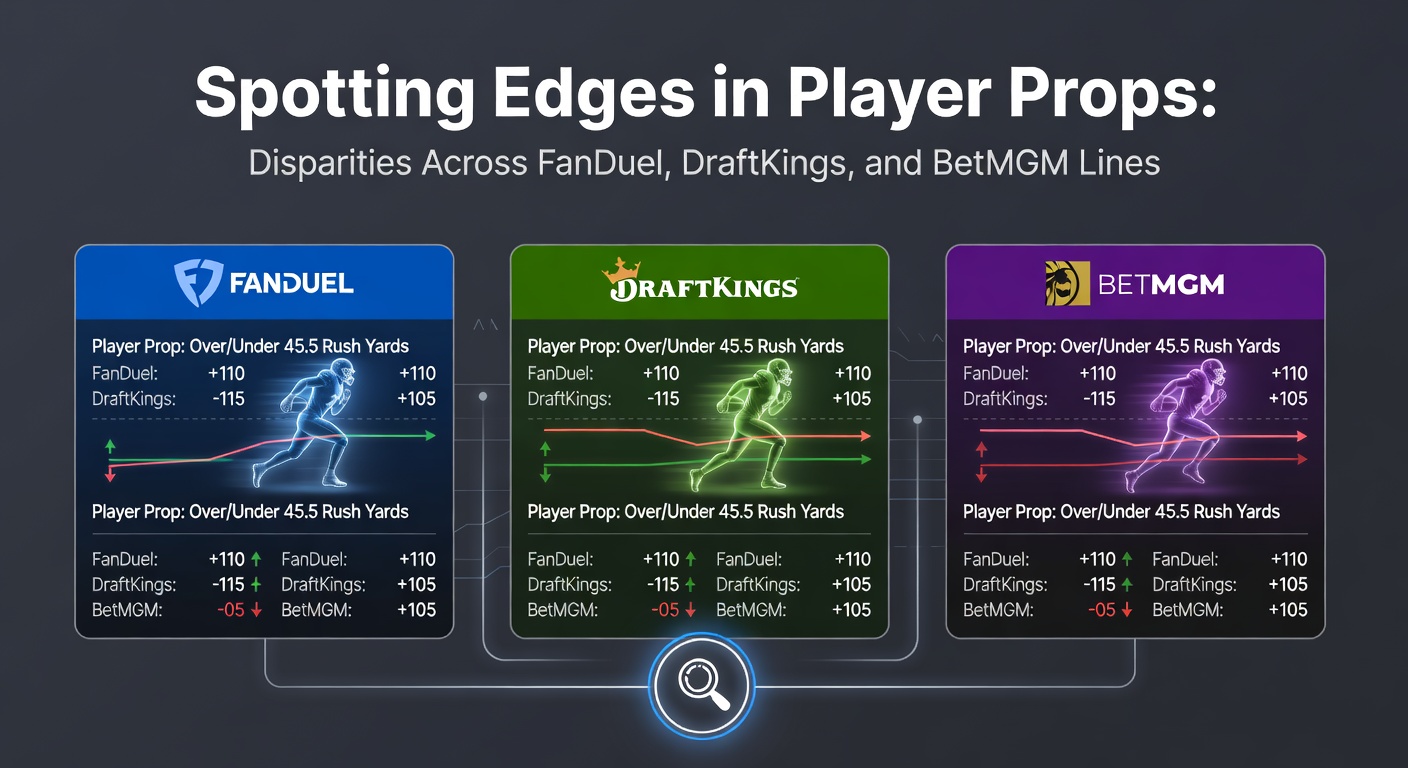
Player props have surged in popularity among US bettors, accounting for a significant slice of total wagers on platforms like FanDuel, DraftKings, and BetMGM; data from the American Gaming Association shows these bets now represent over 30% of sports betting volume in key states during peak seasons such as NBA playoffs. Bettors zero in on individual athlete performances—points scored by a star guard, yards rushed by a running back, or strikeouts tallied by a pitcher—placing over/under wagers or exact stat lines that hinge on granular data. What's interesting is how these lines don't always align across sportsbooks, creating opportunities for those who compare diligently; observers note that even small discrepancies, say a half-point difference in a points prop, can shift implied probabilities enough to yield positive expected value over time.
And yet, while casual players might stick to one app, sharp bettors treat line shopping as routine, flipping between FanDuel's aggressive offerings, DraftKings' data-heavy models, and BetMGM's conservative adjustments shaped by MGM Resorts' legacy risk management. Turns out, these variations stem from distinct oddsmaking philosophies, proprietary algorithms, and responses to real-time betting action, all of which play out vividly in April 2026 amid the NBA postseason grind where stars like Luka Dončić or Jayson Tatum dominate headlines.
Why Do Prop Lines Diverge? Breaking Down the Factors
Sportsbooks craft player prop lines using a mix of historical stats, advanced analytics, injury reports, and matchup simulations, but FanDuel often leads with sharper, more volatile lines derived from massive user data pools; DraftKings, meanwhile, leans on partnerships with Sportradar for real-time projections, while BetMGM incorporates live casino-style hedging to balance books. Research from the Nevada Gaming Control Board highlights how such differences arise from varying tolerances for liability—FanDuel might post a higher over/under on a hot shooter's points to attract volume, DraftKings adjusts downward based on pace-of-play models, and BetMGM splits the difference to minimize exposure.
Here's where it gets interesting: public betting skews lines too, with recreational crowds piling into favorites on FanDuel's user-friendly interface, prompting DraftKings to shade overs protectively, whereas BetMGM holds steadier amid slower action. Experts who've tracked this observe patterns in high-volume markets like NFL passing yards or MLB home runs, where disparities exceed 1 full point regularly; one analysis of 2025 regular-season games revealed average gaps of 0.8 points on star player props, enough to flip -110 odds into +EV territory for the savvy shopper. Although algorithms evolve, human oddsmakers still intervene, especially during injury scares or weather shifts that hit props harder than spreads.
Real-World Examples: Disparities in Action During April 2026
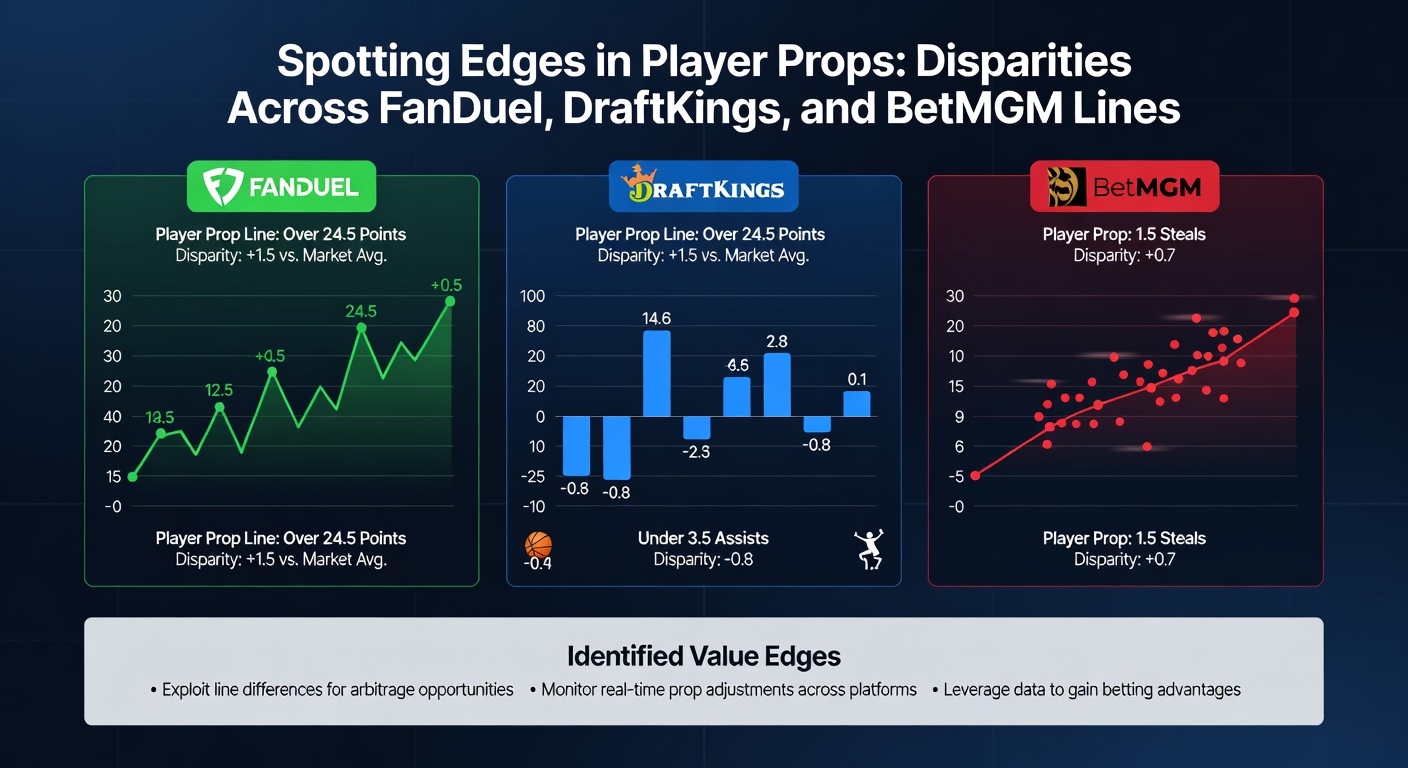
Take the NBA playoffs heating up in April 2026, where a Mavericks-Lakers clash showcased Jalen Brunson's assist prop: FanDuel listed over/under at 6.5 with juice at -112, DraftKings pushed it to 7.5 amid heavy over bets from Dallas fans, but BetMGM stayed conservative at 6.0, reflecting their model's emphasis on defensive matchups. Bettors who shopped snagged the under 7.5 on DraftKings against Brunson's recent averages hovering near 6.2, a spot where data indicated a 58% hit rate per advanced metrics from sources like Cleaning the Glass.
Or consider NFL draft aftermath games, but really, it's the late-season pushes like Week 17 of the 2025 campaign carrying into props analysis: Patrick Mahomes' passing yards saw FanDuel at 285.5, DraftKings at 290.5 after sharp money moved the total up, while BetMGM lagged at 282.5, allowing value on the over there since wind forecasts favored deep balls. People who've pored over thousands of lines note these gaps widen on less efficient markets—second-string receivers' receptions or relief pitchers' outs—where sportsbooks' models diverge most sharply; one case from MLB's Opening Day 2026 had Shohei Ohtani's strikeouts propped at 7.5 (FanDuel), 8.5 (DraftKings), and 7.0 (BetMGM), with the latter proving juicy as Ohtani fanned 9 in a Dodgers win.
So patterns emerge: FanDuel often pioneers aggressive lines for marquee names, DraftKings reacts with public-driven tweaks, and BetMGM anchors with lower totals to cap risk—creating a bettor's playground if lines are checked pre-lock.
Strategies Sharp Bettors Use to Exploit These Edges
Line shopping tops the list, with bettors pulling up multi-app dashboards or odds aggregators to pinpoint the best side instantly; those who specialize build spreadsheets tracking average lines, closing values, and hit rates across props, revealing FanDuel's tendency to overprice overs in basketball by 2-3% implied probability per studies on betting efficiency. But here's the thing—timing matters hugely, as lines converge near tip-off, so acting early on disparities pays off, especially during live betting windows where props refresh dynamically.
Combining props into parlays amplifies edges too, though vig stacks up; experts recommend focusing on correlated plays, like a quarterback's passing yards over paired with a receiver's receptions under on the same book to hedge internal risks. And don't overlook reverse line movement—when lines shift against public money, say DraftKings dropping a points prop despite heavy action, signaling sharp play that BetMGM might still shade favorably. Observers track bankroll allocation strictly, wagering 1-2% per prop to weather variance, since even +EV bets lose 45% of the time at standard juice.
- FanDuel edges: Shop overs on volatile stars like Trae Young, where their lines lead market.
- DraftKings strengths: Unders on inflated totals post-public bets, per their data feeds.
- BetMGM value: Low totals on grind-it-out games, reflecting MGM's brick-and-mortar caution.
Yet success hinges on volume; bettors logging 100+ props weekly spot recurring divergences, turning 1-2% edges into sustainable returns amid April 2026's playoff frenzy.
Tools, Data Sources, and Pitfalls to Navigate
Apps like OddsJam or Action Network streamline comparisons, displaying real-time spreads across FanDuel, DraftKings, and BetMGM with EV calculators baked in; serious players layer stats from Basketball-Reference or Pro-Football-Reference, cross-referencing with models like FiveThirtyEight's player projections to validate hunches. What's significant is integrating news feeds—Twitter alerts on lineup changes can widen gaps before books adjust, as seen when a hamstring tweak shifted Tyrese Haliburton's assists line by a full point across platforms in early 2026.
That said, pitfalls abound: correlated parlays tempt fate if one leg tanks the lot, vig erodes thin margins on same-game props, and account limits hit volume players chasing edges. Figures from state regulators underscore discipline's role, with profitable bettors capping exposure per market; those who've mastered this balance report 5-10% ROI on props alone, but only by avoiding emotional bets on hometown heroes.
Conclusion
Disparities in player prop lines across FanDuel, DraftKings, and BetMGM offer tangible edges for bettors who line shop religiously, leveraging differences born from unique models, data, and risk appetites; as April 2026 playoffs underscore with fresh examples from Brunson to Ohtani, these gaps persist in high-stakes moments, rewarding diligence over guesswork. Data consistently shows that consistent comparison—coupled with stats-driven validation—turns market noise into profitable signals, keeping sharp players ahead in the evolving US sports betting arena. Now the ball's in bettors' court: monitor, compare, capitalize.